
First, the honest disclaimer: this is an everwet equatorial forest — it rains in every month, and animals don't consult calendars. What follows are tendencies, not promises.
The year at a glance
| Period | Weather tendency | What it means on the ground |
|---|---|---|
| Mar – May | Transitioning drier | Excellent all-round window; trails improving, birds active |
| Jun – Aug | Driest stretch | Peak season — best trail conditions, book 2–3 months ahead |
| Sep – Oct | Still favourable | Great conditions, slightly thinner crowds than mid-year |
| Nov – Feb | Wettest months | Muddy trails, more downpours — but lush, quiet, and frogs everywhere |
What actually drives sightings
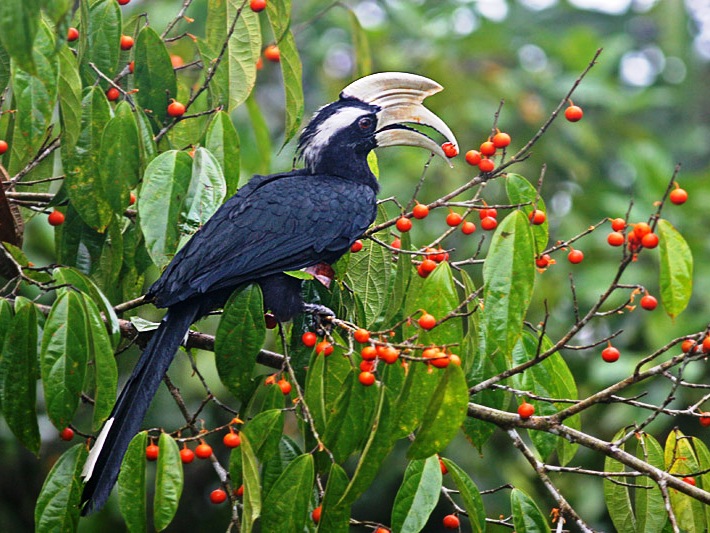
- Fruiting, above all: when fig trees fruit near the lodges, orangutans and hornbills concentrate — and this follows tree rhythms, not months. In rare mast-fruiting years, the whole forest erupts
- Rain timing beats rain totals: a wet-season trip with dry mornings out-delivers a dry-season trip with badly timed downpours — and post-rain hours are wildlife gold
- Nights in forest: more nights beat better months. Four nights in November likely out-sights two nights in July
- Rivers and pools: drier stretches concentrate animals near water; elephant herds favour the river corridors
Special interest timing
- Birders: resident species (including the bristlehead) are present year-round; the drier window simply makes long trail days more comfortable
- Frog & macro enthusiasts: embrace the wet months — November to February is the amphibian show
- Photographers: dawn mist is thickest and most photogenic in wetter periods; dry-season clarity suits canopy and landscape work
- Families & first-timers: June–August's reliability is worth the peak-season booking discipline
The one-line answer
If you can choose freely: March–October, staying 3+ nights. If you can't: come anyway — no month in Danum Valley is a bad month, and the forest's worst day beats most places' best.